

Old Testament Bible Studies on melanienewton.com
Christ-focused, grace-based, and Bible-rich studies covering Old Testament books and topics
AI was not used to generate this page.
Everyday Women, Ever-Faithful God: 16 Old Testament women trust God with their fears (11 lessons, podcasts)
Profiles of Perseverance: Study the lives of Joseph, David, Elijah, & Nehemiah (11 lessons, podcasts)
Reboot Renew Rejoice: See God’s powerful presence at work in 1 & 2 Chronicles (11 lessons, podcasts)
Identity: Study Ezra, Nehemiah, Esther, Daniel, Haggai, Zechariah, and Malachi (11 lessons, podcasts)
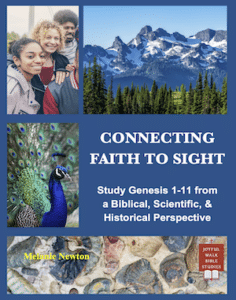
Connecting Faith to Sight: Genesis 1-11 from a biblical, scientific, & historical perspective (7 lessons)
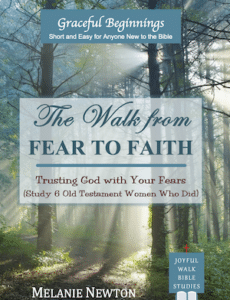
The Walk from Fear to Faith: 6 Old Testament women trust God with their fears (6 lessons, short & easy, podcasts)
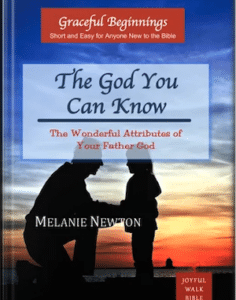
The God You Can Know: Attributes of your Father God (8 lessons, short & easy)
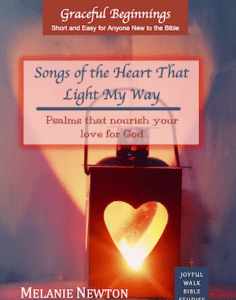
Songs of the Heart That Light My Way: Loving God through Psalms (8 lessons, short & easy)
FAQs: About Studying the Old Testament
The Old Testament is not irrelevant to us today. Yes, it is about the Jews and the old covenant they had with God (the Mosaic Law). Yet, the New Testament writers continually quote the Old Testament, especially referring to God’s promises to those who believe in Him and trust Him. The assumption is that you know the context of those quoted verses and why they are important. New and young Christians need to focus their Bible reading and study on the New Testament. They need to know Jesus through the gospels and all that they have in Christ through Acts and the letters that follow. But once someone is established in her faith in Christ, a Christian needs to be able to read and understand the Old Testament because God has purpose for us in those writings.
As you study Old Testament books, read first to obtain accurate understanding of what the author(s) meant. Then, use New Testament teachings to apply truth about God to your everyday life in Jesus Christ. That is what we will be doing in this study. Each lesson will help you understand what the author’s original intent was based on language studies and translation comparisons plus any historical information about the time period. Then, you are directed to consider what is taught in the New Testament about our life with Christ that applies to current situations similar to what is found in the Old Testament passages you study.
Much of the Old Testament is written in narrative form. For example, Genesis through Esther are mostly historical books. Yet, even parts of the books of prophecy are narrative (as in Jeremiah, Ezekiel, and Daniel). Narrative means the text describes what happened. It is descriptive, not usually prescriptive—a very important difference.
Descriptive means the observation of what actually happened, how people lived and made choices on how to do life at the time. For example, “David and all the Israelites were celebrating with all their might before God, with songs and with harps, lyres, timbrels, cymbals and trumpets” (1 Chronicles 13:8). This is not a restriction on the types of instruments that can be used in worship. Prescriptive means a command from God about how to live or do something that applies to all believers, all people groups, and all time periods. For example, “Love the Lord your God with all your heart and with all your soul and with all your strength” (Deuteronomy 6:5). This applies to every human who is alive or has ever lived. Unless it is prescriptive, you cannot take passages from Old Testament narratives and create a formula for doing things a certain way to guarantee God’s blessing on the result.